College Introduces Leash as Theme for 2026–27 Lecture Series

The University of Tennessee, Knoxville’s College of Architecture and Design has announced Leash as the theme for its 2026–2027 Lecture and Exhibition series, inviting a year-long exploration of connection, freedom, and the tensions that exist between the two.
Drawing from the French laisse and the Latin laxus, the theme reframes the leash not simply as a tool of restraint, but as a loose, permissive, and sometimes contradictory bond—one that can tether ideas, disciplines, people, and practices while still allowing space for movement and discovery.
Throughout the academic year, UT faculty and visiting lecturers will examine how design can challenge conventions, forge unexpected relationships, and expand the “loose territory” between control and possibility.

Lindsey Wikstrom, August 24
Wikstrom is an award-winning architect, known for advancing regenerative approaches to design, with a focus on material innovation, biodiversity, and wellbeing. As the Founding Principal of Mattaforma, and through both her studio and her scholarship, Wikstrom advances the idea that architecture can be a choreography of care: designing not only for buildings, but for the interconnected flourishing of communities, landscapes, and planetary systems.
Wikstrom is the recipient of the 2026 National Design Award for Emerging Designer from Cooper Hewitt Smithsonian Design Museum.
She is the author of Designing the Forest and Other Mass Timber Futures (Routledge, 2023), a book that situates architecture within living forest systems and argues for more just and ecological building practices. She has contributed essays to Domus, Architect’s Newspaper and other publications, and joins conversations with other global leaders in design and ecology, including Prada’s Possible Conversations and MoMA’s Emilio Ambasz Institute.
 Kimberly Mitchell, August 31
Mitchell is a graphic designer and assistant professor in UT’s School of Design. Her work centers on the intersection of design, aging, and health. Her work centers on “design for our future selves,” an approach that challenges designers to consider the evolving needs of people across the lifespan. By integrating universal and age-inclusive design principles, she explores how thoughtful design can create more equitable, joyful, and sustainable experiences for current and future generations.
Her award-winning interdisciplinary work bridges design and gerontology through research-informed practice. Mitchell has presented at national and international conferences, published in scholarly journals, collaborated on inclusive design initiatives, and developed educational resources that encourage designers to rethink their role in shaping the future. As an educator, she emphasizes co-design and community-driven approaches, preparing students to create meaningful, inclusive solutions for people of all ages and abilities.

Felicia Francine Dean, September 14
Dean is an assistant professor in UT’s School of Interior Architecture. Her creative scholarship investigates the spatial identity of materials and interior artifacts, researching layered connections among culture, the history of interiors, hand and digital craft practices, space, and place.
Among Dean’s published works are the book chapters “Dug by the Devil: Space, Culture, + Material Identity,” in Public Interiority: Politics and Programs, and “Mixed Not Stirred: Diverging Outside the Confines of Racial and Disciplinary Boxes of Identification,” in UpKeep, Repair, and Maintenance in Adaptive Interiors. She was awarded a research and development grant from the Graham Foundation for Advanced Studies in the Fine Arts (2021) for her project Perceptions of Misconceptions. Her work has recently been exhibited at Brew House Arts and Contemporary Craft’s International Fiber Exhibition (2025), the American Association of Woodturners Gallery of Wood Art (2025), and the Sandra J. Blain Gallery at Arrowmont School of Arts and Crafts (2024).

Miguel Rivera, FAIA, LEED AP, September 22
Rivera was born in San Juan, Puerto Rico and obtained his Bachelor’s degree from the University of Puerto Rico School of Architecture. He earned his Master of Architecture from Columbia University, in New York.
Miguel was elevated to the AIA College of Fellows in 2014, and in 2005 he received the AIA National Young Architect Award. Miguel is an active member of the American Institute of Architects and the Texas Society of Architects. He has served as chair for the AIA New York City design awards committee, a juror for AIA design awards in Colorado, Chicago and Alabama and as a juror for the Bi-Annual design awards for the Colegio de Arquitectos of Puerto Rico. Miguel is licensed in Texas, New York, Puerto Rico, and Utah.
Rivera’s lecture is hosted in collaboration with AIA East Tennessee. The lecture will be held at 11:40 a.m. at the Jackson Terminal. Advanced registration is required.
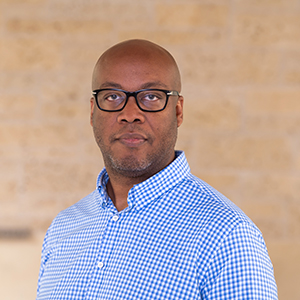
Charles L. Davis II, September 28
Davis is an associate professor of architectural history and criticism and director of the architecture PhD program at the University of Texas at Austin’s School of Architecture. He is also the faculty PI of The Black Space Project, a new interdisciplinary architectural history collective dedicated to recovering, documenting, and archiving the influence of African American space-making practices on the shape and meaning of the built environment. His academic research excavates the role of racial identity and race thinking in architectural history and contemporary design culture. Charles is currently working on a monograph entitled Black Architectural Modernity: A Spatial History of Racial Uplift in the U.S. Settler Colony. This research explores the historical role of spatial occupation and programmatic innovation in the development of a modern Black architectural tradition in the United States between 1865 and the 1990s.

Micropolitan America, an exhibition by ksestudio, October 13–November 13
Curated by Kyriakos Kyriakou, Micropolitan America is an architectural research project and exhibition that examines small towns within the vast networks of capitalist urbanization in the American countryside. While essential to large urban centers, these networks impose political, economic, and environmental pressures on rural communities, which in turn rely on them for their existence. The exhibition explores this question through a collection of drawings that document life in the small town and, without imposing solutions, reimagine the present, projecting onto the future of the countryside. Micropolitan America seeks to spark cross-regional discourse, lifting stereotypes and celebrating the small town as a cell of community action.
An exhibition opening lecture with Kyriakos Kyriakou will be held at 12:55 p.m. on Tuesday, October 13, in the Art and Architecture Atrium.

Jake Boswell, October 16
Boswell is an associate professor of landscape architecture at The Ohio State University’s Knowlton School. His work explores how civil infrastructure emerges at the intersection of social institutions, technological innovation, and natural systems, with particular emphasis on the evolving relationship between energy, infrastructure, and environment.
Trained in landscape architecture, city planning, and cultural anthropology, Boswell advances a hybrid practice that blends historical inquiry, active field investigation, and design speculation. His writing has been published nationally and internationally, and his speculative and applied design work has been recognized in numerous international design competitions. Much of his writing interrogates how societies imagine climate futures and how those imaginaries, in turn, shape the built environment. His recent design work focuses on altering climate change narratives by producing speculative projects that challenge deep-seated ways of thinking about energy and society. That work has been published in leading peer-reviewed journals, including the Journal of Architectural Education, Thresholds, and LA+ Interdisciplinary Journal of Landscape Architecture.
Boswell’s current research extends into questions of energy transition and community agency. As the 2026 Fulbright Scotland Distinguished Scholar, Boswell documented community-owned distributed energy resource (DER) projects across Scotland, examining how their physical forms emerge from specific social, environmental, and economic contexts.
The lecture will be held at 12:20 p.m. in 103A of the Art and Architecture Building.

Benjamin Aranda, October 19
Aranda is a teacher, practitioner, and researcher of experimental design and architecture. He was recently named the inaugural IDC Foundation Distinguished Professor at The Irwin S. Chanin School of Architecture at The Cooper Union, in recognition of his commitment to advancing interdisciplinary learning across the schools of Art, Architecture, and Engineering. At Cooper Union, he has taught undergraduate and graduate design studios as well as interdisciplinary seminars.
Since 2018, Benjamin has co-taught Generative Algorithms and Machine Learning for Art and Architecture—nicknamed “GenML”—alongside electrical engineering professor Sam Keene, the John and Mary Manuck Distinguished Professor of Design. The course explores the intersections of computation, creativity, and cross-disciplinary collaboration.
Benjamin is also a principal at Aranda\Lasch, an architecture and design studio based in New York and Tucson. Their wide-ranging work—from generative software to physical architecture—reflects a critical engagement with making in an age of algorithmic tools, invoking long-standing histories and cultural traditions. Their work is part of the permanent collections of the Museum of Modern Art in New York, the Art Institute of Chicago, among others, and has been exhibited internationally across a range of institutions and galleries. Recognition includes the United States Artists Award, the Architectural League’s Emerging Voices Award, the Miller Prize, and support from the Graham Foundation.

Preston Scott Cohen, November 2
Cohen is the founding Principal of Preston Scott Cohen, Inc., an architecture firm in Cambridge, Massachusetts. He is the author of Taiyuan Museum,Lightfall, The Return Of Nature, and Contested Symmetries which is recognized for having established pedagogical strategies that combine typological analysis and studies in projective and other types of geometry. He has authored numerous theoretical and historical essays including “Toroidal Architecture”, “Elegance, Attenuation, Geometry”, “Dexterous Architecture”, “The Hidden Core of Architecture” and “Successive Architecture.”
His work has been widely published and exhibited internationally at The Museum of Modern Art, New York, The Cooper-Hewitt National Design Museum, San Francisco Museum of Modern Art, Museum of Contemporary Art, Los Angeles and the Fogg Museum of Art, Harvard. His work is the subject of numerous theoretical assessments by renowned critics and historians including Michael Kimmelman, Nicolai Ouroussoff, Antoine Picon, Sylvia Lavin, Terry Riley, and Rafael Moneo.
Cohen is the Gerald McCue Professor at Harvard University Graduate School of Design where he was the chair of the Department of Architecture from 2008-13. Currently, he is the program director of the post-professional Master in Architecture Degree program.

Mario Carpo, November 11
Carpo, a 2022–23 Guggenheim Fellow, is the Reyner Banham Professor of Architectural Theory and History at the University College London’s Bartlett School of Architecture. He was the head of the Study Centre at the Canadian Centre for Architecture in Montréal (2002–2006); Vincent Scully Visiting Professor of Architectural History at the Yale School of Architecture (2010–2014); Senior Scholar in Residence at the Getty Research Institute (2000-2001); Resident at the American Academy in Rome (2004), etc.
Mario Carpo’s research and publications focus on the history of early modern architecture and on the theory and criticism of contemporary design and technology. His award-winning Architecture in the Age of Printing (MIT Press, 2001) has been translated into several languages. His most recent books are The Alphabet and the Algorithm (2011); The Second Digital Turn: Design Beyond Intelligence (2017); and Beyond Digital. Design and Automation at the End of Modernity (2023), all published by the MIT Press.
Carpo’s lecture is supported by the Gensler Charitable Foundation.
Unless otherwise noted, lectures are held at 5:15 p.m. in McCarty Auditorium, room 109, in the Art + Architecture Building. All lectures are free and open to the public.
Support for the College of Architecture and Design’s lecture series is championed by the Robert B. Church III Memorial Lecture Fund.